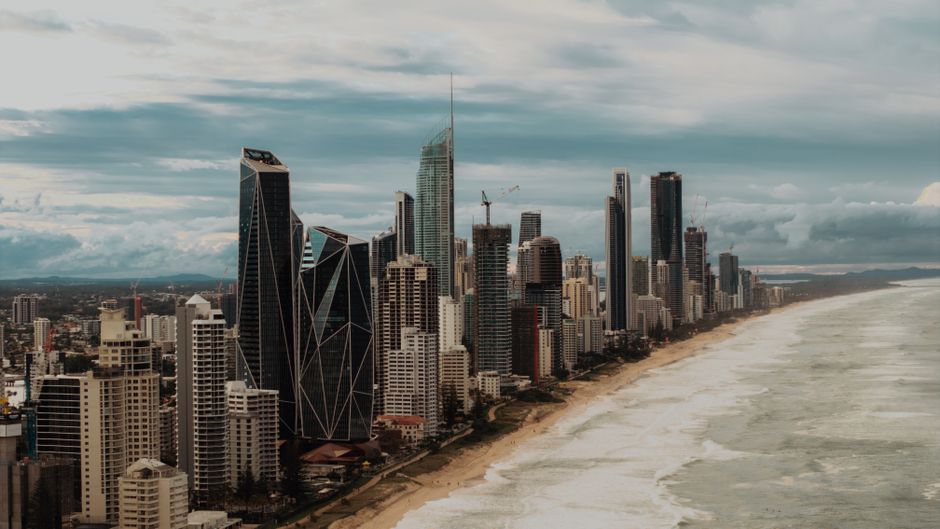
More than $2.4 billion in venture capital landed in Central Coast startups in the first half of 2026 alone, a 38 percent jump on the same period last year, according to figures compiled by the Central Coast Innovation Council released last week. The number sounds like a triumph. Talk to enough founders, landlords, and community advocates along the Terrace Mile precinct, and the picture gets complicated fast.
The timing matters. Globally, AI investment is reshaping where money flows and who controls it. Browser platforms are fragmenting. Hardware startups are chasing workplace productivity niches. EV infrastructure remains stubbornly uncertain. Central Coast sits inside all of those currents simultaneously, which is precisely why funds from Sydney, Singapore, and San Francisco have been circling the Harbour Quarter district with unusual aggression since late 2025.
The Pressure Cooker on the Ground
Nowhere feels the squeeze more visibly than the Fennell Bay tech corridor, where co-working rents have climbed 22 percent since January. Startups that anchored at the Lighthouse Hub on Maritime Drive two years ago at $650 per desk per month are now being quoted $920 for renewal. Three early-stage teams there confirmed they are weighing relocations to the cheaper Gosford North fringe, a flight that would pull talent further from the angel networks clustered around the Waterfront Precinct.
The Central Coast Founders Alliance, a nonprofit that runs the Catalyst Accelerator program out of Gosford CBD, has been tracking the displacement. Its mid-year survey found that 41 percent of pre-seed companies with fewer than 10 employees said rising operational costs were their single biggest existential threat, ahead of customer acquisition and ahead of competition. That is not an abstract risk. Several of those companies are building tools in health data and aged-care logistics, sectors where Central Coast has a genuine structural advantage given its demographic profile. Losing them to cheaper cities would be a concrete, measurable loss.
The ethical questions run deeper than rent. A wave of AI-adjacent startups is attracting capital with few guardrails on what they actually build. The Central Coast Digital Ethics Working Group, convened by the University of Newcastle's Ourimbah campus in March 2026, published a discussion paper in May warning that several locally funded ventures were operating in regulatory grey zones around biometric data collection and algorithmic hiring tools. The paper named no companies, but its existence signals that local institutions are starting to take the governance gap seriously. Investors generally are not, at least not yet.
Who Actually Benefits?
There is also the workforce question. Venture money creates jobs, but not always the jobs a regional city needs most. Analysis published by the Hunter-Central Coast Economic Development Board in April found that 73 percent of roles created by VC-backed Central Coast startups in 2025 required a university degree, against a local working-age population where only 29 percent hold one. Training pipelines exist, TAFE NSW runs a digital skills bridge program at its Wyong campus, but they operate on 12-to-18-month timescales that do not match the hiring sprints venture-backed teams run on.
None of this negates the genuine opportunity. Institutional capital at this scale gives local founders access to networks and product validation cycles that were essentially unavailable five years ago. The question the city needs to answer before the next funding wave crests is structural: who sets the terms, who enforces the guardrails, and which residents share in the upside beyond the handful of cap-table holders.
The Central Coast Innovation Council is expected to release a revised startup support framework before the end of Q3 2026. Community advocates are pushing for it to include mandatory living-wage commitments for portfolio companies receiving public co-investment, as well as a formal ethics review mechanism linked to the Ourimbah working group. Whether the council adopts those measures or quietly shelves them will say a great deal about whose gold rush this actually is.