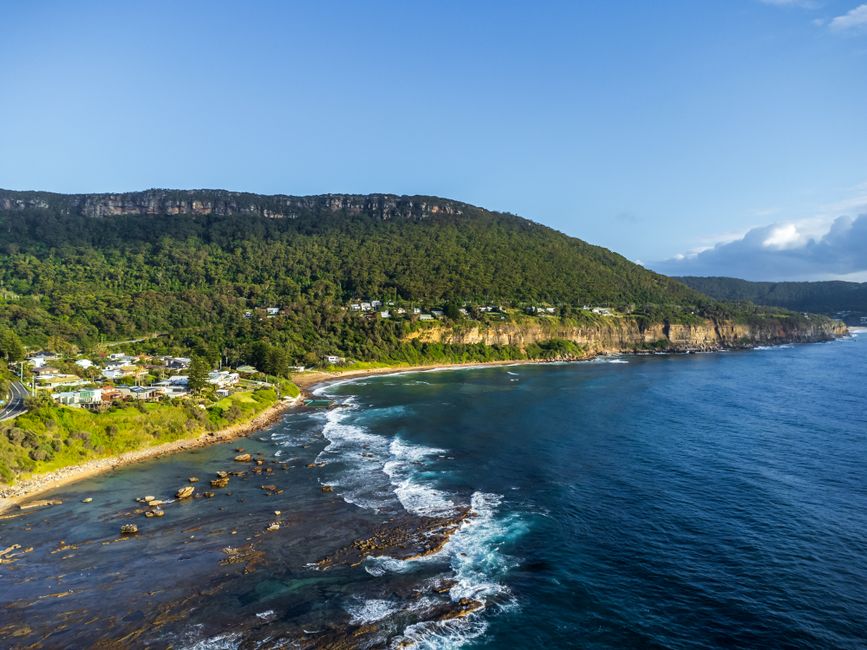
Central Coast is currently bucking the global trend of heat-island expansion. While major metropolitan hubs from Tokyo to Sydney are seeing record-breaking temperatures this June—Sydney’s average hitting its highest point since 1859—our local mercury levels are staying lower thanks to a deliberate, decade-long commitment to uninterrupted green corridors.
City planners are now calling our layout a “breathing urban organism,” prioritizing wide, park-linked passages that funnel cool air from the Pacific through the heart of the CBD. This isn't just aesthetic; it’s a survival tactic. As concrete absorbs heat, our extensive canopy cover acts as a natural air conditioner, a design strategy that international urbanists are starting to cite as the gold standard for mid-sized cities.
The Anatomy of Our Green Lungs
The secret lies in the connectivity of our public land. Unlike many international cities that isolate parks within rigid concrete grids, the Central Coast Council’s 'Green Spine' project links the waterfront at Gosford with the established bushland reserves in the hinterland. Residents walking from Mann Street up toward the ridgelines near Narara are rarely out of the shade of mature eucalyptus and native ferns. Organizations like the Central Coast Landcare Network have been instrumental in this, planting over 40,000 native saplings in the past five years alone to maintain these vital cooling transit paths.
The impact is visible at the Terrigal Skillion and the surrounding parklands, where the wind shear off the water is preserved by a lack of high-rise obstruction near the shoreline. These spaces act as public living rooms that remain functional even when ambient temperatures spike. The council’s recent 'Cooling the Coast' audit noted that canopy-dense zones remain on average 4.2 degrees Celsius cooler than inner-city zones dominated by asphalt.
The Economics of Shade
Data from the July 2026 local property and amenities report suggests that proximity to these managed green zones has bolstered local lifestyle businesses. Cafes lining the perimeter of Kibble Park are reporting a 15% increase in foot traffic during the recent unseasonably warm afternoons. It is a stark contrast to neighboring regions where the midday heat is effectively shutting down outdoor commerce. With council budgets currently allocating $12.5 million toward the maintenance of these corridors for the next financial year, the city is signaling that environmental mitigation is the baseline for our economic future.
For those looking to navigate the heat this week, the best approach is to utilize the 'Creek-to-Coast' trail, which offers the most consistent shade cover and active airflow. Check the Central Coast Council website’s live heat-mapping tool before heading out to ensure you’re moving through the lowest-temperature corridors. If you are struggling with the transition from indoor, climate-controlled environments to the outdoors, the local botanical gardens at Mount Penang offer the best micro-climate refuge, with current readings showing it remains the coolest point in the urban zone.