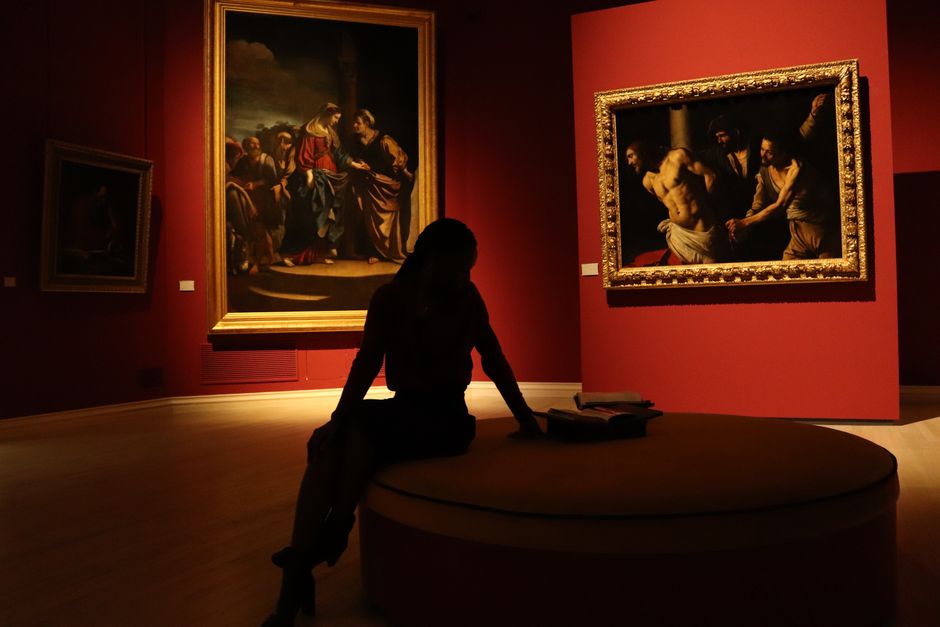
The Central Coast's art world didn't spring from a master plan. It emerged, haphazardly and sometimes defiantly, from converted shipping containers on the foreshore and the converted lofts of artists who couldn't afford Sydney rents anymore.
Today, that scrappy foundation supports something altogether different: major institutions with seven-figure acquisition budgets, international touring exhibitions, and the kind of foot traffic that keeps cafes on Argyle Street busy until midnight. The transformation tells you something about how cultural infrastructure actually gets built—not through government committees, but through artists taking risks, landlords getting weird, and a city willing to reimagine itself.
The narrative usually starts in the late 1990s, when the Central Coast's industrial waterfront sat largely dormant. Property prices were cheap. Building codes were flexible. That's when artists began squatting in old warehouses along the inner-city strip near Port Street. The Greenhouse Collective formed in 1998, a co-operative studio space that housed thirty painters, sculptors, and installation artists in a converted textile factory. By 2004, rent pressures had shifted them twice, but the model had proven durable: collective ownership, shared resources, rotating exhibitions that drew increasingly serious crowds.
The break came in 2009 when the Central Coast Museum & Art Gallery received a $12 million state funding commitment for a new purpose-built facility on Civic Square. The gallery's previous home, a converted Victorian mansion on Bungonia Avenue, had served the public since 1987, but it operated on a shoestring—a single paid director and volunteers running the till. The new space, which opened in 2013, changed everything. Suddenly the institution could host works from international lenders. Suddenly artists had a proper venue to target for solo shows. Suddenly the city's cultural infrastructure had teeth.
Where the Galleries Actually Are
The current landscape sprawls across neighbourhoods that each have their own character. The Central Coast Museum & Art Gallery on Civic Square remains the heavyweight—their 2025 annual report showed over 127,000 visitors across seven exhibitions, up 34 percent from the previous year. The programming has grown ambitious. Their current winter season runs until August 31 and includes a retrospective of photographer Lindy Lee's work alongside a contemporary installation by three Indigenous artists from the Western lands.
But the institutional space tells only half the story. The Foreshore District, that original bohemian zone, evolved differently. The Argyle Street Gallery Precinct now contains fourteen independent galleries operating within three blocks—smaller venues like Dock & Anchor Contemporary and the Portal Project, which specializes in emerging artists from the Central Coast and regional New South Wales. A 2024 survey by the Central Coast Arts Council counted 68 active commercial galleries across the city, up from 31 in 2010. That's the expansion that rarely makes headlines, but it's where the scene actually lives.
Phoenix Contemporary, which opened in 2019 in a converted boat shed on the Port Street waterfront, bridged those worlds. Owner Catherine Moss expanded from a single 400-square-metre gallery into a three-venue operation with artist studios upstairs and a café downstairs that pulls locals with no museum interest whatsoever. "People come for coffee and walk into a $50,000 sculpture," Moss told me last month. "That's the whole thing."
Building on What Works
The next wave appears to be consolidation and deepening. The Central Coast Arts Council announced in May that it's launching an Artist Residency Program starting in 2027, with three fully funded positions (each $35,000 annually) supporting painters, sculptors, or experimental artists for six-month placements. Three museums and five galleries have signed on as hosting partners. That's institutional buy-in that would have been unthinkable in 1998.
If you're a visual artist or serious collector, the scene now operates on multiple levels. There's the institutional pathway through the Museum & Art Gallery's Artist Development grants (currently $18,000 per project, deadline November). There's the grassroots route via the Greenhouse Collective's open-studio nights every second Saturday. There's the commercial route through Argyle Street dealers who actively scout emerging work. The infrastructure, in other words, exists. What took three decades to build from derelict warehouses and volunteer hours is now distributed across enough venues and funding streams that a career in visual art here is actually viable.
The Central Coast's art scene remains smaller than Sydney's or Melbourne's. The comparison is pointless. What matters is that it works—and that it's still fundamentally rooted in the idea that artists should be able to make things where they live, and that ordinary people should stumble into galleries by accident on a Saturday afternoon.