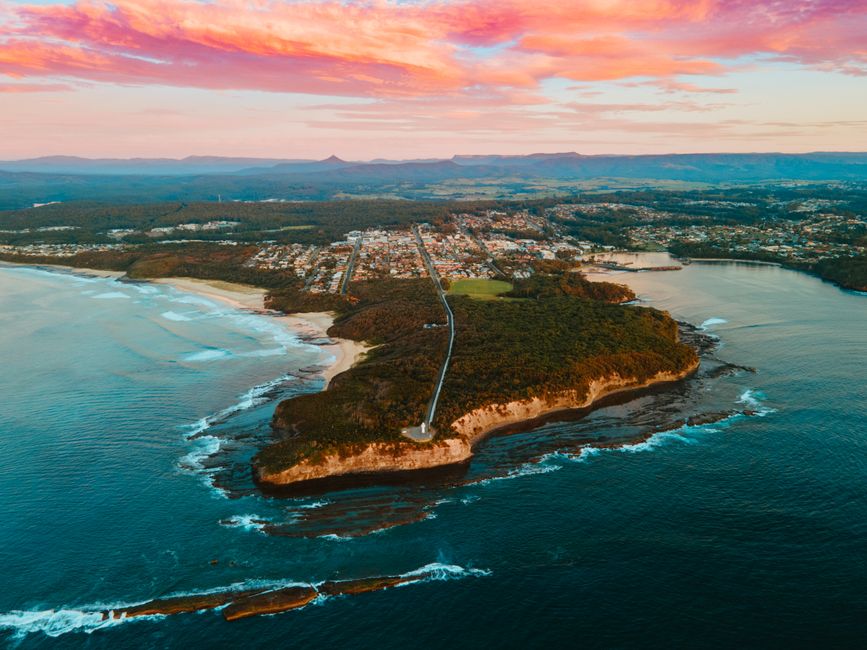
Central Coast's economy is sending mixed signals in July 2026, and reading them correctly could be the difference between a smart investment decision and an expensive mistake. Residential property is cooling, industrial land is tightening, and a national shift in government spending toward manufacturing is beginning to reach the region's doorstep.
The context matters. Across eastern Australia, property investors are pulling back sharply following the May federal budget's changes to negative gearing thresholds. Melbourne's auction clearance rates have fallen below 55 percent — a figure not seen since the pandemic-era lockdowns of 2021. Sydney's outer metropolitan markets, which include the Central Coast, are tracking a similar retreat. That has direct consequences for anyone holding investment property in suburbs like Gosford, Tuggerah or Woy Woy, where a significant share of housing stock has historically been investor-owned.
What the Local Data Is Telling Us
In Gosford's CBD, commercial agents reported that foot traffic in the Kibble Park precinct picked up through the June quarter despite the residential slowdown — a sign that retail and hospitality spending has not collapsed alongside investor sentiment. Central Coast Council's most recent quarterly economic snapshot, released in late June, showed employment in the Tuggerah Business Park corridor grew by 3.2 percent year-on-year, driven largely by logistics and light manufacturing tenants. That figure outpaced the Greater Sydney average of 2.1 percent for the same period.
The Gosford waterfront redevelopment, anchored by the Central Coast Mariners' upgraded Industree Group Stadium and adjacent mixed-use sites along Leagues Club Road, has continued to attract interest from hospitality operators despite the broader property chill. Leasing agents working the Terrigal-Avoca strip say short-term commercial vacancies have actually tightened since March, with inquiry levels from food and beverage operators up noticeably. Industrial land in Somersby and Lisarow tells a sharper story: average rents for warehouse space rose to approximately $145 per square metre annually as of June 30, compared with $118 per square metre twelve months earlier — a 23 percent jump that mirrors national pressure on industrial property driven partly by competition from AI data centre developers seeking large, power-connected footprints.
The New South Wales government's $1.2 billion commitment to return train manufacturing to the Hunter Valley, announced this week, is relevant here too. The supply chain for that program will need components, fabrication and logistics support — and the Somersby industrial precinct, sitting on the F3 corridor less than 40 minutes from the Hunter's boundary, is well positioned to attract subcontracting businesses. Central Coast Industry Connect, the region's peak business networking body based in West Gosford, has already begun conversations with the NSW Department of Regional Industry about ensuring local firms are on the tender shortlist.
What Investors and Homeowners Should Watch Next
For residential property, the practical picture is this: the Central Coast median house price sat at $895,000 in May 2026, according to CoreLogic data, down from a peak of $960,000 in late 2025. First-home buyers, who might logically be expected to fill the gap left by retreating investors, are not yet stepping forward in numbers — affordability remains stretched even at lower prices, and fixed-rate mortgage products are still hovering above 6.1 percent at most of the major lenders.
The smarter play for local business owners right now is probably watching industrial rather than residential signals. If the Somersby and Tuggerah vacancy rate continues compressing — it sat at 4.7 percent in June, down from 8.2 percent in June 2024 — that points to genuine underlying demand, not speculative froth. Council's upcoming quarterly economic briefing, scheduled for August 12 at the Gosford Regional Library on Donnison Street, will include updated data on business registrations and construction approvals. Those two numbers, taken together, are the clearest early indicators of where confidence is actually sitting — not where people say it is.