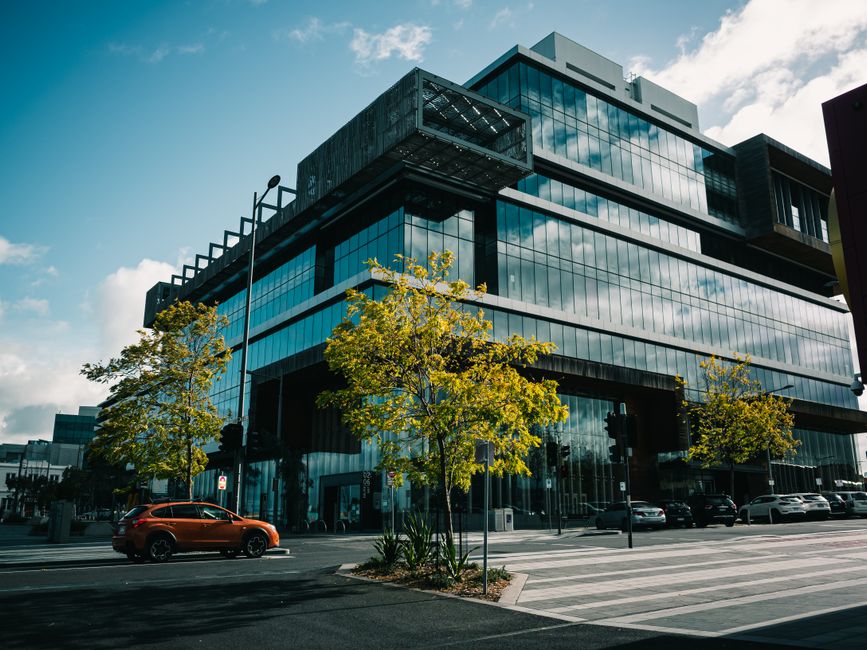
The Central Coast commercial property market is experiencing a quiet but significant shift. After three years of uncertainty, occupancy rates in premium office zones have climbed to 73 percent—up from a pandemic-era low of 58 percent—signalling genuine demand rather than temporary recovery.
The opportunity is concentrated in two corridors. Along the Waterfront Business District, where Class B and C properties traded hands at $3,200 to $4,100 per square metre throughout 2024-2025, forward-thinking operators are now leasing space at $4,800–$5,200, capitalising on improved tenant confidence. Several mid-tier professional services firms have already relocated from outer suburbs back to premium addresses, citing improved amenity infrastructure and foot traffic recovery in the precinct.
The second wave of opportunity centres on the Riverside Quarter, traditionally undervalued against the waterfront. Here, converted heritage buildings and newer mixed-use developments are attracting creative and tech-enabled businesses seeking character at lower entry costs. Several boutique consultancies and digital agencies have recently announced Central Coast relocations from interstate, drawn by the combination of Central Coast's cost-to-amenity ratio and proximity to the regional university hub.
Real estate advisory firms tracking the market point to reduced vacancy in A-grade stock—particularly along Maritime Avenue and the Government District precinct—as a key driver of investor interest. One major institutional fund has acquired a 45,000 square-metre commercial portfolio in the Riverside zone over the past eighteen months, signalling confidence in medium-term appreciation.
The trajectory mirrors broader patterns: companies have settled into hybrid working models rather than abandoning offices entirely. Demand now reflects quality-of-life preferences over cost minimisation, favouring Central Coast's combination of walkability, harbour access, and operational efficiency.
Leasing agents report increased enquiries from interstate firms establishing regional headquarters, particularly in professional services, technology, and finance sectors seeking alternatives to congested major capitals. Average lease terms have extended from 3-4 years to 5-6 years, reflecting tenant confidence rather than short-term trial arrangements.
For investors who moved early—acquiring secondary-grade properties in 2023-2024 and repositioning them—current market conditions represent the payoff. Capitalisation rates on refurbished office stock have compressed from 6.8 percent to approximately 5.9 percent, reflecting renewed institutional confidence. Further yield compression appears likely if major corporate relocations continue.
The window for entry-level opportunity in secondary precincts remains open, though narrowing. Market observers suggest the next eighteen months will determine whether the Central Coast's office market establishes itself as a genuine secondary hub or returns to cyclical underperformance.
This article was compiled by AI from the sources linked above and screened before publishing. See our editorial standards.