news
Housing Pressures, Flood Risk and a CBD in Flux: How the Central Coast Stacks Up Against Its Global Counterparts
From Gosford's stalled renewal to climate-resilience shortfalls, the Central Coast faces challenges that mid-sized satellite cities from New Zealand to the UK know all too well, but the local responses are diverging sharply.
How we reported this
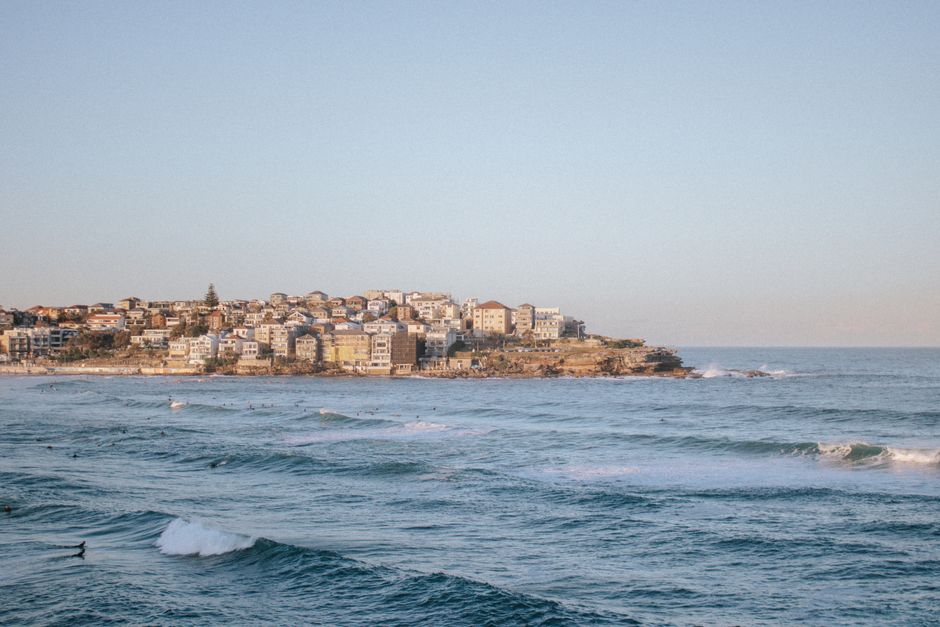
The Central Coast is carrying a familiar weight. House prices that outpaced wages, a central business district still searching for its identity, a council that spent years under state administration, and a floodplain that climate modelling says will only get more volatile. None of these problems are unique to the stretch of coast between Gosford and Wyong, but how this region tackles them, compared to similarly positioned cities elsewhere, tells a sharper story than the usual talking points allow.
That comparison matters right now because mid-sized satellite cities globally are at a decision point. Post-pandemic population shifts pushed commuter towns from Wollongong to Geelong, from Hamilton in New Zealand's Waikato to Swindon west of London, into an awkward adolescence: too big to be ignored, too fragmented to act decisively. The Central Coast's population sits at roughly 360,000, large enough to demand genuine metropolitan infrastructure, small enough that state governments can still treat it as a regional afterthought.
Gosford CBD: The Renewal That Keeps Being Announced
Walk along Mann Street in Gosford on a weekday and the gap between aspiration and reality is obvious. Approved development sites sit idle. The former Gosford Public Hospital precinct, earmarked for a health and education hub, has moved slowly despite years of planning overlays and rezoning work by Central Coast Council. The council, which exited state administration in late 2022 after a financial crisis that wiped out reserves, is still rebuilding institutional trust and internal capacity.
Compare that to Geelong, Victoria, which accelerated its CBD revival after the state government relocated the Transport Accident Commission and other agencies to the city in a deliberate anchor-tenant strategy. Geelong's central area vacancy rates fell noticeably within three years of those commitments. The Central Coast has no equivalent anchor commitment locked in. The proposed fast rail corridor between Gosford and Sydney's CBD, a sub-60-minute journey that planners have floated for decades, remains unfunded in any concrete capital works program as of mid-2026.
Hamilton, New Zealand offers another reference point. That city of around 180,000 pushed hard on a compact growth boundary and transit-oriented density around its Te Rapa and Frankton corridors. The result: median house prices, while still elevated, rose more slowly than in Auckland's satellite suburbs. On the Central Coast, median dwelling prices in suburbs like Woy Woy and Terrigal have tracked above $900,000 in recent sales data, putting first-home entry well out of reach for the service workers and young families the region needs to function.
Flood Planning: Behind the Curve or Building Toward It?
The Hawkesbury-Nepean valley gets most of the flood headlines in NSW, but the Central Coast's low-lying areas, particularly around Tuggerah Lake, Budgewoi, and the Wyong River corridor, face compounding inundation risks as east-coast low systems intensify. Central Coast Council adopted an updated Local Flood Management Strategy in 2024, incorporating climate projections through to 2070, but translating that document into rezoning decisions and infrastructure spending is a slower process.
Cities like Dordrecht in the Netherlands, often cited in urban planning literature, redesigned entire residential precincts around water storage and controlled flood corridors decades ago. Closer to home, Newcastle's post-BHP era redevelopment along the Hunter River embedded flood buffers into its foreshore renewal. The Central Coast's version of that thinking, retreat incentives for high-risk properties near The Entrance and Toukley, for instance, has not yet materialised as formal policy with funding attached.
What residents and businesses can do now is practical. Central Coast Council's online flood mapping tool, updated after the 2022 strategy review, allows property-level risk checks, worth doing before any purchase or major renovation in lakeside suburbs. State government infrastructure grants under the Disaster Ready Fund remain open for community applications through Services NSW. And the proposed Gosford to Sydney fast rail route, however distant, is still a live federal submission, meaning local councils and advocacy groups like the Committee for the Central Coast have a narrow window before the next federal budget cycle to push for a feasibility study commitment that carries real dollars.
The Central Coast is not failing. But it is moving at a pace that similar-sized cities in better-funded jurisdictions have already moved past. The gap is closeable, if the decisions get made before the next flood season, not after it.